Interregional connectivity is the key to shaping a new-generation free trade zone in Ho Chi Minh City
27/01/2026
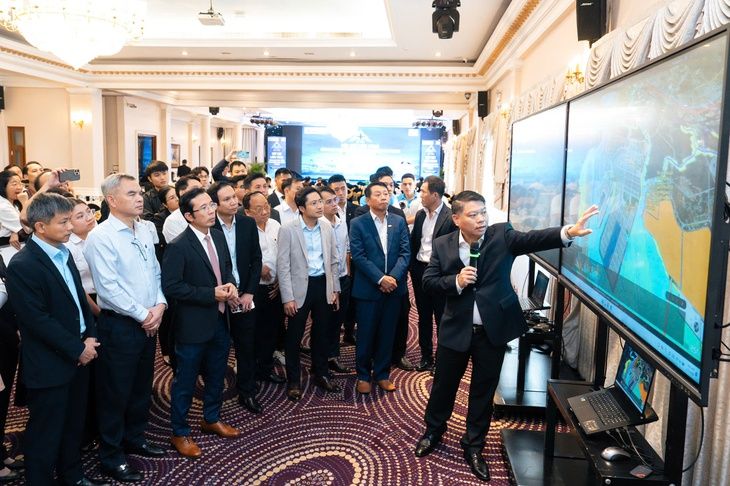
Interregional connectivity is not merely a supporting condition, but is increasingly becoming a core driving force enabling Ho Chi Minh City to establish and effectively operate new-generation Free Trade Zones (FTZs), with the Cai Mep Ha Free Trade Zone as the focal point.
The seminar “Interregional Connectivity – A Driving Force for the Development of Ho Chi Minh City’s Free Trade Zone” took place in the context of Ho Chi Minh City entering a new phase of development after expanding its economic space, moving toward a mega-metropolitan model integrating industry, logistics, and financial services.
This content was emphasized by many experts at the seminar “Interregional Connectivity – A Driving Force for the Development of Ho Chi Minh City’s Free Trade Zone” held on January 27.
The seminar was held as Ho Chi Minh City steps into a new development phase following the expansion of its economic space, aiming toward a mega-metropolitan model integrating industry, logistics, and financial services. According to experts, viewing FTZs merely as standalone bonded zones would limit breakthrough potential. In contrast, positioning FTZs within an interregional connectivity framework allows their full potential to be unlocked.
“Mega-region” mindset and the role of Cai Mep Ha
According to Mr. Vu Chi Kien, Deputy Director of the Ho Chi Minh City Institute for Development Studies, the merger of Binh Duong and Ba Ria – Vung Tau has opened a new chapter for Ho Chi Minh City, expanding its total area to more than 6,770 km².
The city’s total GRDP in 2025 is estimated at VND 3.03 quadrillion, more than 1.5 times higher than in 2020, accounting for 23.5% of national GDP. GRDP per capita is estimated at VND 220 million, approximately 1.7 times the national average. State budget revenue is projected at VND 737 trillion, representing 36.7% of total national budget revenue.
This development has transformed Ho Chi Minh City from a central urban area into a mega urban–industrial–logistics region, encompassing production capacity, maritime and aviation logistics systems, and international financial services.
Within this new structure, Cai Mep Ha is identified as the direct international maritime gateway of Ho Chi Minh City, as well as a strategic location for developing a new-generation free trade zone. The Cai Mep Ha FTZ is expected not only to perform cargo transshipment functions, but also to act as a “radiating nucleus,” reshaping interregional value chains toward higher efficiency.
Mr. Kien noted that the advantages of deep-water port infrastructure, the ability to accommodate large and ultra-large vessels, and direct connectivity to major international shipping routes enable Cai Mep Ha to serve as a foundation for Ho Chi Minh City to upgrade its role in the Southeast Asian logistics chain.
A key highlight of the seminar was the proposal for a symbiotic connectivity model between the Cai Mep Ha Free Trade Zone and the area associated with Long Thanh International Airport, forming an integrated and inseparable maritime–aviation logistics corridor.
Accordingly, Cai Mep Ha is positioned as the “maritime gateway,” while Dong Nai plays the role of the “aviation gateway” for high-tech manufacturing and air cargo logistics. Cargo from production centers in Binh Duong and Dong Nai can undergo deep processing, packaging, and inspection before being transferred to the Cai Mep Ha FTZ for export. Conversely, imported raw materials arriving via seaports become direct inputs for factories within the region.
This approach helps optimize logistics costs, shorten cargo circulation time, and efficiently leverage both deep-water seaports and Long Thanh International Airport—two strategic infrastructure assets of the Southern Key Economic Region.
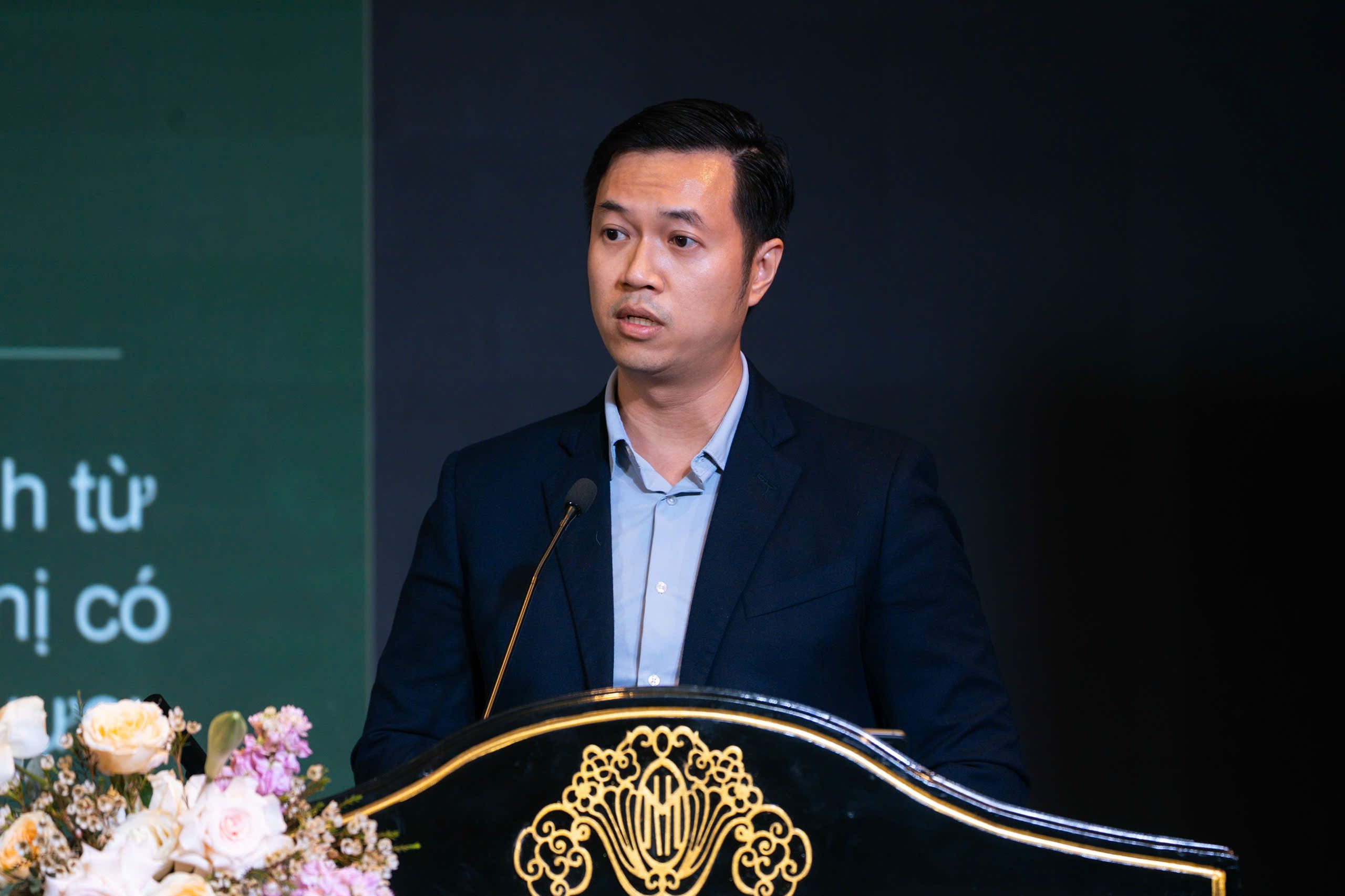
Mr. Vu Chi Kien, Deputy Director, Ho Chi Minh City Institute for Development Studies
Institutional breakthroughs for seamless FTZ operations
In addition to physical infrastructure, Mr. Vu Chi Kien emphasized the decisive role of institutional breakthroughs and governance models. According to the Ho Chi Minh City Institute for Development Studies, effective operation of new-generation FTZs requires the establishment of an interregional institutional “green lane,” minimizing administrative barriers among localities.
Proposed measures include developing an integrated governance mechanism, with Ho Chi Minh City acting as the core coordinator of cargo and service flows between FTZs and surrounding regions; implementing legal sandbox models for emerging sectors such as high-tech logistics, international finance, and digital trade; and establishing a dedicated FTZ management authority with sufficient mandate to promptly handle investment, land, infrastructure, and labor procedures.
Mr. Kien emphasized that establishing the Cai Mep Ha Free Trade Zone is a strategic step toward economic autonomy and enhancing Ho Chi Minh City’s economic position. The FTZ should be placed at the center of the city’s master plan toward 2045, ensuring synchronization between hard infrastructure (multimodal transport systems) and soft infrastructure (special institutional mechanisms), while applying public–private partnership (PPP) models to attract strategic investors capable of leading global supply chains.
“The formation of the Cai Mep Ha Free Trade Zone will demonstrate Ho Chi Minh City’s innovative mindset—not only generating internal growth momentum, but also serving as a locomotive driving the entire Southeast region toward international integration,” Mr. Kien stated.
According to experts, only when hard infrastructure is aligned with soft institutional frameworks can a free trade zone truly become an open economic space capable of competing with regional logistics hubs.
The seminar is considered an important initial step in concretizing the free trade zone model in Ho Chi Minh City. Many opinions suggest that developing the Cai Mep Ha Free Trade Zone is not only about attracting investment or increasing import–export turnover, but also a strategy to elevate the economic position of Ho Chi Minh City and the entire Southeast region amid increasingly intense global competition.
Experts agreed that interregional connectivity is the “key” ensuring that the free trade zone does not become an isolated project, but instead acts as a driving force for restructuring economic space, toward a sustainable growth model with higher value added for Ho Chi Minh City in the long term.
Source: Tuoi Tre