Vietnam's current export and logistics: Opportunities, challenges and solutions
30/06/2025

Vietnam's exports and logistics sector is facing numerous significant opportunities for breakthroughs; however, it also confronts many challenges: from global macroeconomic fluctuations, fierce competition from regional rivals, to new trade barriers, all of which demand continuous innovation and adaptation from businesses. On June 25, 2025, the Ho Chi Minh City Logistics Association (HLA) organized an online workshop themed: “Vietnam’s Exports and Logistics Today: Opportunities, Challenges, and Solutions” to provide an in-depth perspective on the export and logistics market, while offering practical coping strategies amidst a volatile global trade landscape.
Vietnam's import-export market closely adheres to its growth targets but remains significantly affected by global fluctuations.
Since early 2025, the world economy has become more unpredictable due to continued complex factors: armed conflicts in some countries, global trade instability, and extreme weather events threatening supply chains. In particular, Vietnam is heavily impacted by retaliatory tariffs from the US and non-tariff trade barriers from developed countries through new standards on environment - labor - anti-climate change, which increase compliance requirements for various industries. Mr. Nguyen Hoai Chung, Member of the Executive Committee, Deputy Head of HLA Policy Board, and CEO of Phaata, emphasized that upcoming retaliatory tariffs from the US will directly reduce the competitiveness of Vietnamese goods in the US market, affect the shifting FDI capital into Vietnam for manufacturing, and increase pressure on exchange rates. For the last six months of the year, regardless of the retaliatory tariff scenario for the Vietnamese market – whether a general agreement with the US is reached to maintain low tariffs for imported goods or no agreement is passed – Vietnamese businesses still need to proactively implement both short-term and long-term solutions such as: market diversification, strengthening supply chain linkages and cooperation, building proactive risk forecasting plans, and transparentize commercial activities.
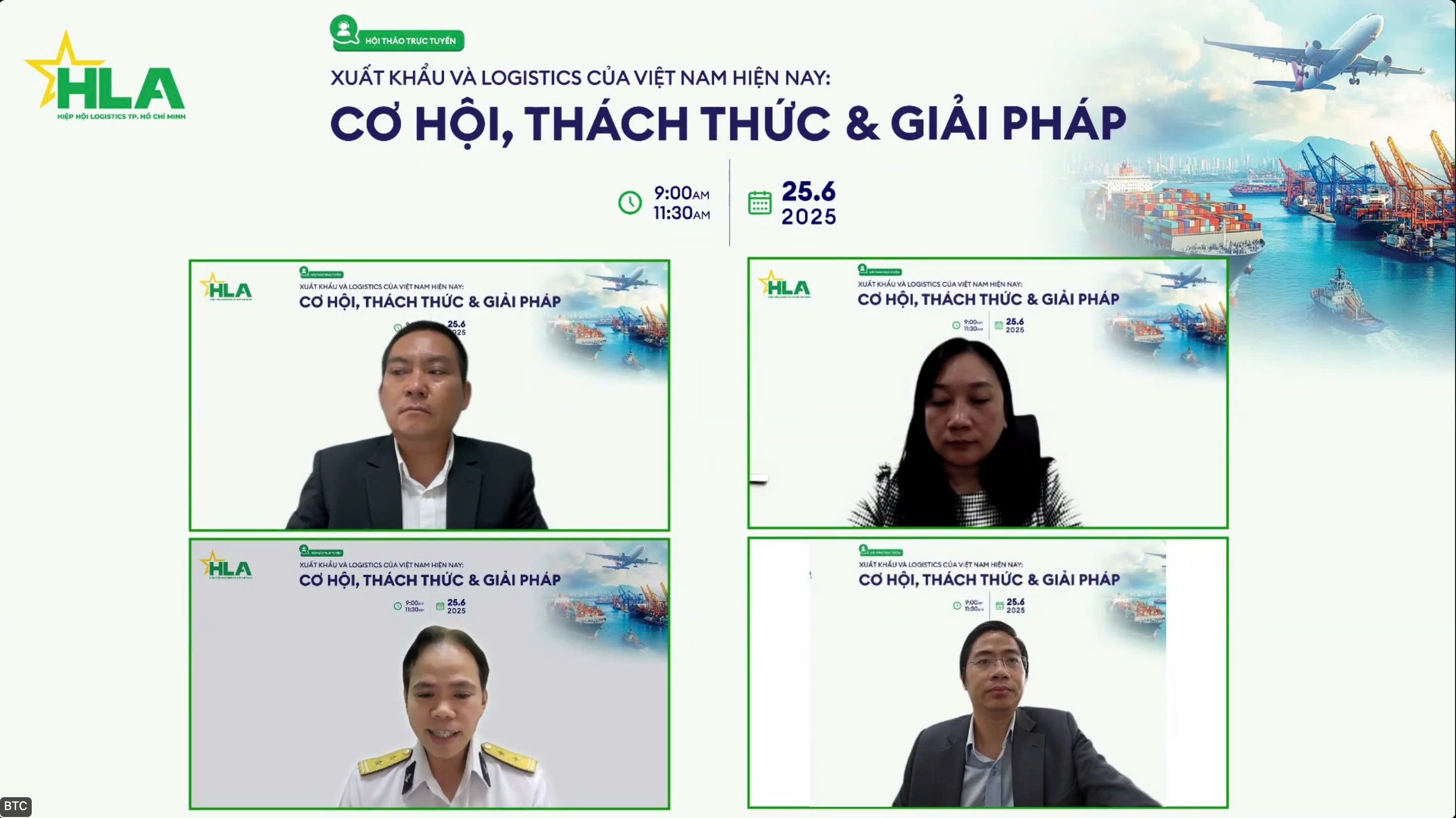 Experts discuss solutions for businesses to cope with the volatile global situation
The Seaport Industry's Response to Global Fluctuations
Currently, the biggest challenge for cargo transportation and circulation through seaports, not only in Vietnam but also in major ports worldwide, is port congestion. Due to many objective and subjective reasons, stemming from strikes and labor shortages, changes in shipping line alliance structures, geopolitical events, and climate fluctuations, port congestion worldwide is at an alarming level. In Vietnam, despite the ongoing trade war, throughput at ports has still increased, and a series of new service routes have been deployed following the formation of new alliances. According to statistics, the Trans-Pacific route alone has seen 6 new service routes launched since February. When throughput increases, new service routes increase, and the capacity of newbuild vessels also increases, port capacity must necessarily increase to meet demand. However, the development capacity of Vietnamese ports has not kept pace with the development speed of vessel fleets. The seaport network, especially in the Southern region, is under immense pressure as global and local manufactured goods volumes rapidly increase. In the first 6 months of 2025 alone, nearly 20 new connection routes were added.
Mr. Truong Tan Loc, representing Saigon Newport Corporation (SNP) – a leading port operator, proposed several optimal solutions to help businesses enhance export competitiveness and optimize supply chains, including: synchronous multi-modal transport, expanding service network connectivity, market diversification, and expanding investment.
Currently, when inland waterway transport capacity cannot meet demand, SNP has rapidly deployed new road routes, offering flexible services without additional costs for customers, specifically the Cai Mep – Long Binh route (opening a destination port at Tan Cang – Long Binh ICD), and routes connecting Cai Mep with depots in Ho Chi Minh City and neighboring areas.

Mr. Truong Tan Loc – Marketing Director of SNP, shared about the seaport industry’s optimal solutions.
Direct Delivery – An Opportunity to Enhance Business Production Efficiency
Changing the direct delivery practice for customers, contributing to easing the imbalance in the supply chain in the Ho Chi Minh City area, is one of the strategies that SNP will strongly implement in the coming time. SNP has actively developed new facilities and new connection routes to create more convenient and suitable options for customers in delivery and receipt, maximizing cooperation to bring optimal value to customers, and strengthening inter-port connections to support crisis management due to congestion. Specifically, this includes cooperation to develop service routes at Phuoc An port without additional costs for customers, cooperation with VIMC, cooperation with ports in the Cai Mep port cluster to optimize resource utilization, negotiations with VICT, and promoting connectivity between the Cai Mep port cluster and Tan Cang Long Binh ICD – serving the circulation of export, import, and empty containers for customers in Bien Hoa and Dong Nai.
See more about Direct Delivery Customer Support policies here.
In the long term, SNP continues to invest in upgrading capacity and expanding connectivity, such as modernizing equipment at Cat Lai and Cai Mep, investing in the construction of berths 7 and 8 in the Lach Huyen area, and expanding the depot system in key regions. Concurrently, SNP continuously pursues digital transformation and green transformation, aiming for sustainable development and enhanced customer experience. With SNP's efforts to change, the shift in goods delivery practices will bring customers more optimal opportunities, saving time, costs, simplifying procedures, and leveraging regional linkage opportunities.
See detailed conference materials here.