
WHEN CARRIERS RESTRUCTURE FLEET AND CAPACITY
05/10/2026
In previous articles, we have looked at how port congestion can reduce effective operating capacity, how carriers are redesigning their networks, and what determines a port’s role within those networks. Recent service adjustments in Vietnam in September point to another dimension: carriers are not simply adding or withdrawing services, but continuously changing how vessels and capacity are deployed across their networks. Hai Phong, for example, can leave one service while maintaining a direct connection to Los Angeles through another. A direct service from Vung Tau to the U.S. West Coast can be introduced during a peak period and then suspended as market conditions change. For ports, therefore, the question is not simply whether a service has been “added or removed,” but which connections are being maintained, where capacity is being deployed, and how a port’s role is changing within the network.
Each service plays a different connectivity role
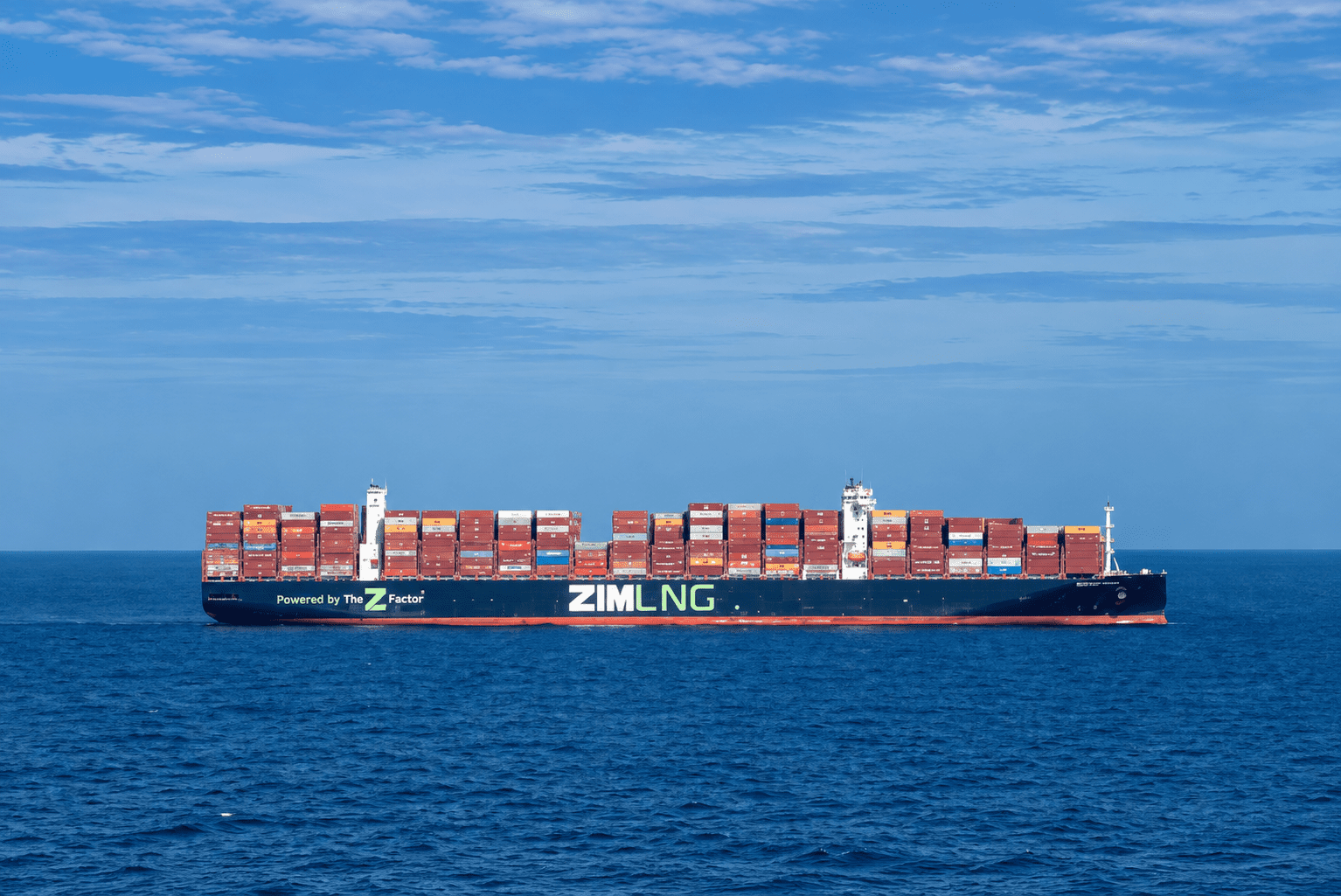 In September, ZIM Mount Olympus, an LNG-powered container vessel with a capacity of approximately 15,000 TEUs, called at Hai Phong on ZIM’s ZXB service, connecting Vietnam with Yantian, Xiamen and U.S. East Coast ports.
The CMA CGM case provides a clearer illustration of how a connection can be maintained even when a port call is shifted to another service. According to the carrier’s August 4, 2026 announcement, CMA CGM transferred the Hai Phong call from the MTE service to PEARL. The PEARL rotation includes Port Klang – Laem Chabang – Hai Phong – Yantian – Los Angeles – Gwangyang – Qingdao. Notably, the direct Hai Phong–Los Angeles connection remains in place, with a published transit time of 20 days, seven days shorter than before.
Looking only at the information that “Hai Phong was removed from MTE” would therefore provide an incomplete picture. What matters more is which markets remain connected and through which service that connection is reorganized.
MSC made a similar adjustment to its Pearl and Sentosa services. From Voyage 636, Pearl continues to call at Hai Phong and connect with Long Beach, while Xiamen is removed from the rotation. Meanwhile, Sentosa Voyage 634 drops Hai Phong and Oakland but adds Xiamen, while retaining Vung Tau on its rotation to Long Beach.
These changes show that port calls can be redistributed between services without necessarily meaning that an existing market connection has disappeared. At the same time, this does not mean that all terminals within the same port area will experience the same impact. The port area named in a network schedule and the specific terminal being served are two different levels of information.
Maersk’s TPX service provides another example. The transpacific service was a seasonal addition during the 2026 peak period, with its final Vung Tau call scheduled for September 29. The service will then be suspended for the remainder of Q4, while Maersk has indicated that alternative options will be provided through its existing network.
Taken together, these cases show that direct services can play very different roles: one may be a relatively stable component of a carrier’s network, while another may be introduced to meet demand during a specific season or period.
When assessing a service change, therefore, the number of services added or withdrawn is only the starting point. The analysis needs to go further, looking at the markets served, the routing, the frequency, and how long the service is maintained.
When carriers restructure fleet and capacity
These changes are not only about adjusting port calls. When a route changes, the way a carrier deploys its fleet across individual services can also change.
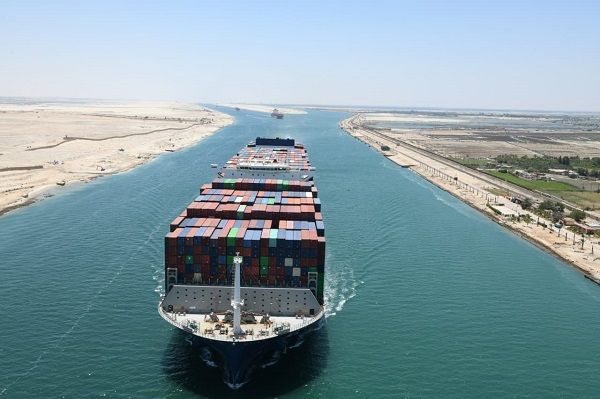
The return of some Asia–Europe services to the Suez route is one example. Sea-Intelligence recorded that in September 2026, around 27% of Asia–Europe capacity, measured on a two-way average basis, had begun returning to the Red Sea/Suez route. Bringing vessels back to Asia is also seen as one factor helping carriers address capacity gaps caused by congestion and schedule disruptions at Asian hubs.
This illustrates how a routing change in one region can have implications elsewhere. When vessels no longer need to spend additional time sailing around the Cape, ships and capacity can be released for redeployment on other services.
Capacity developments across major trades in 2026 also show that carriers are not adjusting capacity in the same direction across all markets. According to Sea-Intelligence, scheduled capacity on East-West trades continued to increase in the first half of the year, but the amount of capacity being cut also rose significantly, with substantial differences between individual trades. For example, Asia–U.S. East Coast scheduled capacity increased by 46%, while cut capacity rose by as much as 215%. On the Asia–North Europe trade, the corresponding increases were 20% and 83%.
This suggests that carriers are continuously adjusting the amount of capacity offered on individual trades, rather than allocating capacity according to a uniform trend across markets.
On the supply side, the global container fleet is also continuing to expand. According to BIMCO, global container fleet capacity is expected to reach nearly 34 million TEUs following the delivery of new vessels, representing an increase of around 42% over five and a half years.
However, growth in the global fleet does not automatically mean that capacity will be added to every market or port. New vessels can be used to replace older ships, increase the scale of existing services, or support new routes, depending on market conditions, operating patterns and how carriers organize their service networks.
The key point to watch, therefore, is not simply how much the global fleet is growing, but where those vessels and that capacity are being deployed.
From the port perspective: what should be monitored?
For Vietnamese ports, these developments show that competitiveness is not determined solely by the number of services calling at a port. It also depends on the port’s role within individual carrier networks and its ability to maintain connectivity as those networks evolve.
A service can be adjusted while its market connection remains in place. Conversely, even a direct service with strong cargo volumes may be temporary if it is introduced to meet seasonal demand or a specific market requirement.
Instead of simply tracking whether a service has been “added or lost,” port operators therefore need to look simultaneously at the size and type of vessels deployed, service frequency, the markets connected, the port’s position in the rotation, and how long the service remains in operation.
For port operators, the most valuable information is therefore not simply whether a new service has been announced or an existing one withdrawn. More importantly, they need to understand how fleet deployment, service frequency and market connectivity are changing, and prepare operating capacity and infrastructure accordingly.
The objective is not to preserve every service unchanged, but to maintain connectivity and the port’s role as carrier networks continue to be restructured.