Port Congestion, Fuel Price Surge, and Container Shortages: Warning Signs for the 2026 Peak Season?
15/06/2026
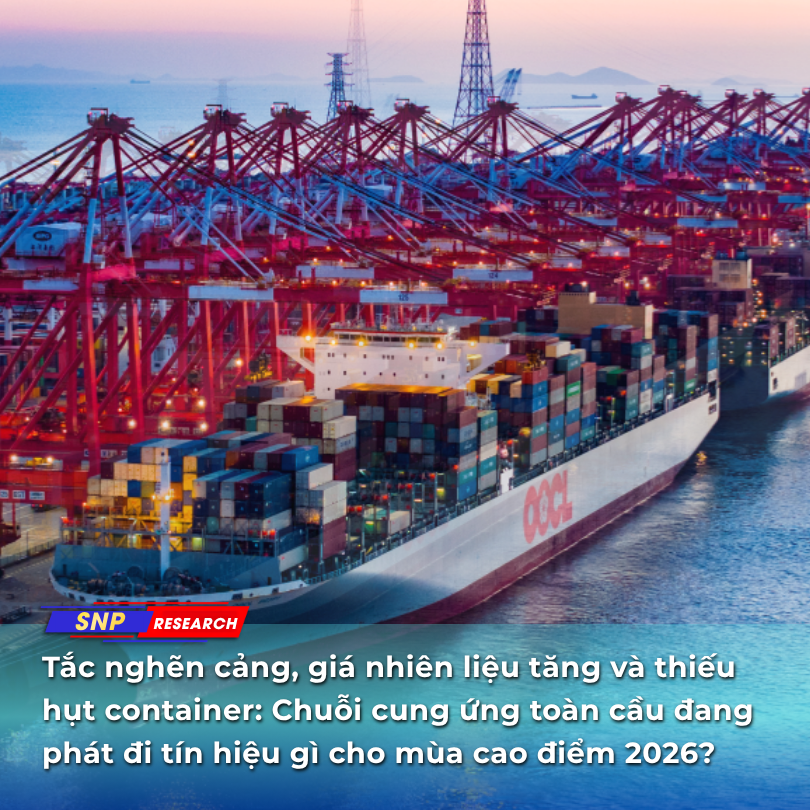
Global container shipping markets are entering a new phase of volatility as worsening port congestion, tightening vessel capacity, and escalating fuel costs combine to drive freight rates sharply higher across major east-west trade lanes.
Space availability is tightening rapidly on both the Asia-Europe and Transpacific corridors. A combination of severe congestion at key Chinese gateways and accelerated peak season bookings has created significant upward pressure on spot rates, while carriers continue to implement aggressive pricing measures to offset rising operating costs.
Congestion and Early Shipping Demand Fuel Rate Rally
During the past week, dense fog and clustered vessel arrivals significantly disrupted operations at major Chinese ports including Shanghai and Ningbo. Longer vessel waiting times and berth delays have reduced effective capacity just as shippers accelerate cargo movements ahead of anticipated regulatory changes and peak season demand.
According to Linerlytica, the impact on freight rates has been immediate:
Asia-Europe Trade
- SCFI rates to North Europe surged 30.8% week-on-week, reaching their highest level in 18 months.
- Carriers are targeting Freight All Kinds (FAK) rates approaching USD 6,000 per FEU for mid-June sailings.
Transpacific Trade
- Chinese exports to the United States continue to rebound as cargo owners advance shipments ahead of upcoming policy deadlines.
- Following successful implementation of General Rate Increases (GRIs) and Peak Season Surcharges (PSS) on June 1, SCFI rates to the U.S. West Coast climbed 31.5% to USD 4,149 per FEU, the highest level in eleven months.
- Additional upward pressure is expected as shippers race to move cargo before the July 24 expiration of Section 122 tariff provisions.
Fuel Markets Add Structural Cost Pressure
While congestion has been the most visible catalyst for recent rate increases, fuel markets are increasingly becoming a major source of structural inflation across global shipping networks.

VLSFO marine fuel prices remain around USD 1,000 per ton, placing significant cost pressure on shipping lines and the global supply chain.
Prices for Very Low Sulphur Fuel Oil (VLSFO) have remained near USD 1,000 per metric tonne, approximately double pre-conflict levels and comparable to the record highs observed in 2022.
High Sulphur Fuel Oil (HSFO) has scaled past $800 per tonne. However, because VLSFO prices surged even faster, the "scrubber spread" (the price difference between VLSFO and HSFO) has widened significantly—reaching $140/mt in Rotterdam and $115/mt in Singapore. This has temporarily benefited older, scrubber-equipped vessels capable of burning cheaper fuel. (source from Global Maritime Hub)
Compounding the challenge, bunker fuel availability has become increasingly fragmented across regions. Beyond elevated crude oil prices, shipping lines are facing localized shortages and procurement difficulties, forcing vessels to secure fuel at higher prices and less efficient locations.
Middle East Disruptions Continue to Strain Global Supply Chains
The ongoing disruption around the Strait of Hormuz is creating additional friction across regional and global logistics networks.
With vessel transits through the waterway reportedly operating far below normal levels, congestion is intensifying at key regional hubs including Jeddah, Khorfakkan, Sohar, Fujairah, and Salalah. Some facilities are experiencing utilization rates near operational limits (The Loadstar)
At the same time, carriers are increasingly shortening service rotations and discharging cargo at alternative transshipment hubs in India and Sri Lanka rather than calling directly at affected Middle Eastern ports. While this strategy helps maintain network stability, it introduces additional transit complexity and delays for regional cargo owners.
A secondary consequence has emerged in the form of equipment shortages. Large volumes of empty containers remain stranded within Gulf-region supply chains, reducing equipment availability in Asia and placing further pressure on both Asia-Europe and Transpacific trade lanes.
Carriers Shift from Temporary Measures to Long-Term Adaptation
Shipping lines are increasingly treating current market conditions as a prolonged operating environment rather than a temporary disruption.

Port congestion continues to increase
Major carriers including Maersk, MSC, CMA CGM, and Hapag-Lloyd have accelerated implementation of Emergency Fuel Surcharges (EFS), with adjustments occurring far more frequently than traditional bunker adjustment mechanisms.
Historically, fuel surcharges were updated with a lag of several months. Today, carriers are revising surcharges on a near-continuous basis to recover rapidly escalating operating expenses.
The cost burden is also expanding beyond ocean freight. Many carriers are introducing additional fuel-related surcharges across inland transportation networks, including rail and trucking services, extending pricing pressure throughout the supply chain.
Further uncertainty emerged on June 8, when Iranian officials signaled that future vessel transits through the Strait of Hormuz may be subject to newly structured transit fees based on vessel size and cargo characteristics. If implemented, the measure would add another layer of cost inflation to global shipping operations.
Broader Logistics and Industrial Implications
The effects of maritime fuel inflation are now extending well beyond container shipping.
The aviation sector is facing similar challenges as rerouting requirements and elevated fuel prices weigh heavily on profitability. At the same time, governments are beginning to intervene to protect critical supply chains (Urban Academy, 2026).
In Europe, authorities have introduced temporary support measures allowing member states to subsidize a significant portion of fuel-related cost increases affecting transportation, agriculture, and fisheries (The European Commisioner)
Meanwhile, some carriers are accelerating adoption of alternative fuels. Demand for biofuel blends such as B30-VLSFO has increased in major European bunkering hubs as operators seek to reduce exposure to conventional fuel price volatility while capturing environmental compliance benefits.
Market Outlook
Current market conditions suggest that freight rates remain supported by both cyclical and structural factors.
On the demand side, accelerated peak season bookings and tariff-related frontloading continue to absorb available capacity. On the supply side, congestion, fuel inflation, equipment shortages, and network disruptions are restricting effective vessel availability.
Unless port conditions improve significantly or geopolitical tensions ease, freight markets are likely to remain elevated through the third quarter. The combination of persistent congestion, constrained equipment supply, and aggressive carrier pricing strategies suggests that the current rate rally has the potential to extend beyond the traditional peak season cycle.
Source: SNP Marketing Department.