SCFI Surges 92.9%: Vietnam’s Exporters, Ports and Logistics Sector Navigate a New Freight Reality
08/06/2026
The global container market is experiencing a massive wave of rate momentum. The Shanghai Container Freight Index (SCFI) rose sharply by 15.9% in Week 22, hitting 2,572 points. This marks an astonishing 92.9% increase since conflict broke out in the Middle East just three months ago.
Despite the prolonged Hormuz blockade and soaring bunker oil prices, global cargo demand remains incredibly resilient. Rather than slowing down trade, these disruptions have actually accelerated the movement of clean energy goods. Meanwhile, US import volumes have received an extra boost following the lifting of the IEEPA tariffs.
Shippers should brace for a costly summer. Carriers successfully implemented rate hikes and peak season surcharges on June 1st, and they are already positioning themselves for another round of general rate increases (GRIs) in mid-June. Freight futures markets are currently pricing in a market peak for July, meaning this upward rate momentum will likely hold strong until at least the end of July.
Shippers should brace for a costly summer. Carriers successfully implemented rate hikes and peak season surcharges on June 1st, and they are already positioning themselves for another round of general rate increases (GRIs) in mid-June. Freight futures markets are currently pricing in a market peak for July, meaning this upward rate momentum will likely hold strong until at least the end of July.
What is the SCFI?
The SCFI stands for the Shanghai Container Freight Index. It is the most widely watched economic indicator for the ocean freight market. It measures the weekly spot rates for exporting containers out of Shanghai to major destination ports worldwide, serving as a baseline health check for global shipping costs.
Vietnam’s Export Sector Under Pressure
Vietnamese exporters are feeling the squeeze. Exports hit USD 46.93 billion in “May 2026,” up 18% year-on-year, with outbound shipments in the first four months reaching USD 215.66 billion (+19.5% YoY), according to the General Statistics Office (GSO) as reported by Vietnam News (“May 2026”). Key exports include telephones (21%), textiles (12%), computers/electronics (12%), and footwear (7%).
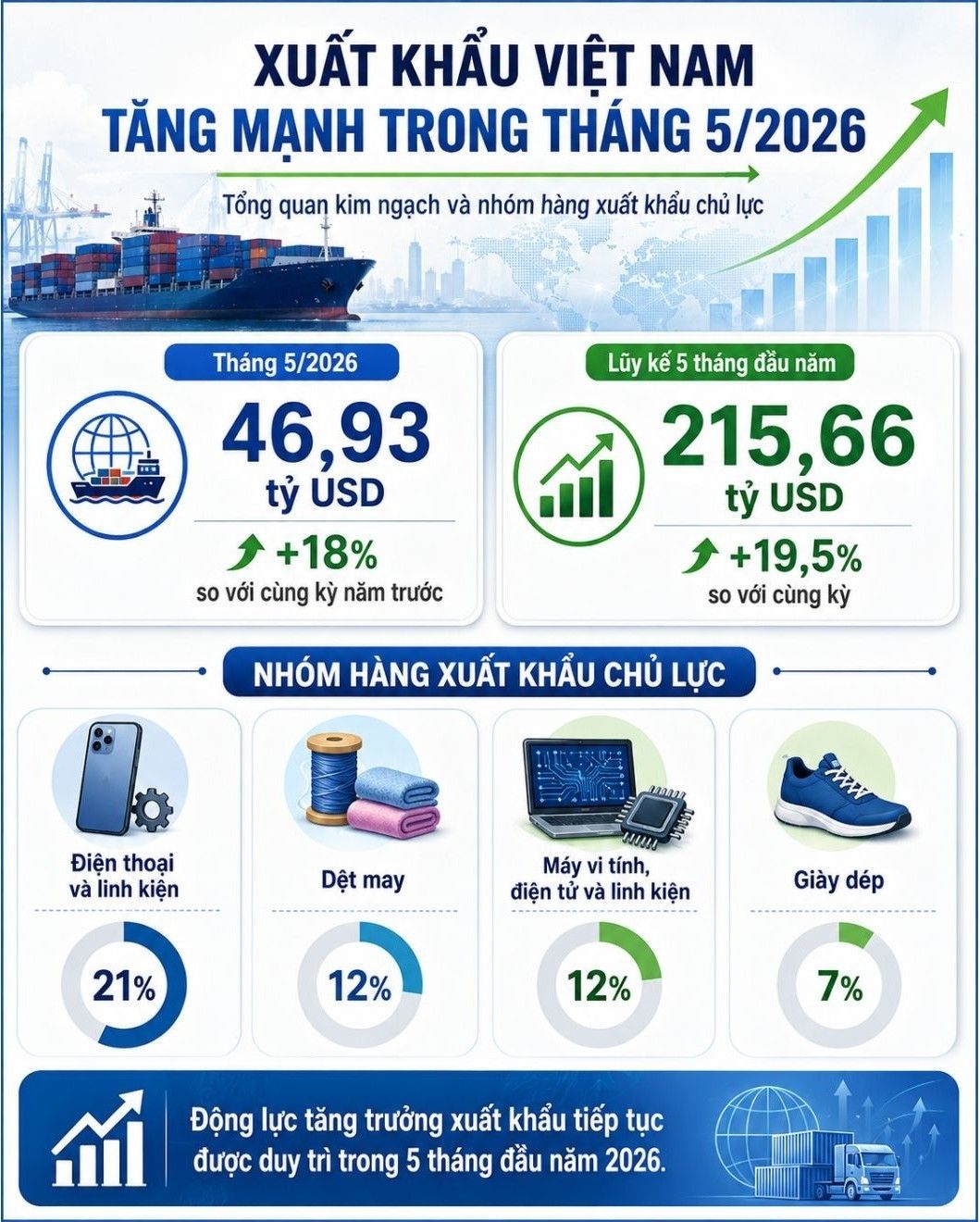
Vietnamese exporters are feeling the squeeze. Exports hit USD 46.93 billion in “May 2026,” up 18% year-on-year, with outbound shipments in the first four months reaching USD 215.66 billion (+19.5% YoY), according to the General Statistics Office (GSO) as reported by Vietnam News (“May 2026”). Key exports include telephones (21%), textiles (12%), computers/electronics (12%), and footwear (7%).
Total import-export value May/2026
“Rising freight costs are eroding margins, especially for SMEs,” said a logistics analyst in Ho Chi Minh City, citing Dai Doan Ket News (March “2026”). “But Vietnam’s tariff advantages under CPTPP and EVFTA, combined with the lifting of US tariffs, are helping sustain competitiveness.” Exporters are increasingly shifting toward higher-value goods such as semiconductors, where margins can absorb freight volatility.
Ports Positioned for Growth
Vietnam’s ports are seeing record throughput. Cargo volumes reached 546 million tons in the first five months of “2026,” up 15% YoY, with container traffic exceeding 15 million TEUs (+14% YoY).
Deep-water hubs such as Cai Mep–Thi Vai and Lach Huyen are positioned to capture rerouted mega-vessels, strengthening Vietnam’s role as a transshipment hub. At the same time, Tan Cang Cat Lai, the primary container gateway in Ho Chi Minh City, is under pressure to enhance infrastructure and technology to match rising demand. Projects such as the Cat Lai Bridge (2026–2029) and the inter-port road corridor (2026–2028) are being launched to relieve congestion and optimize operations.
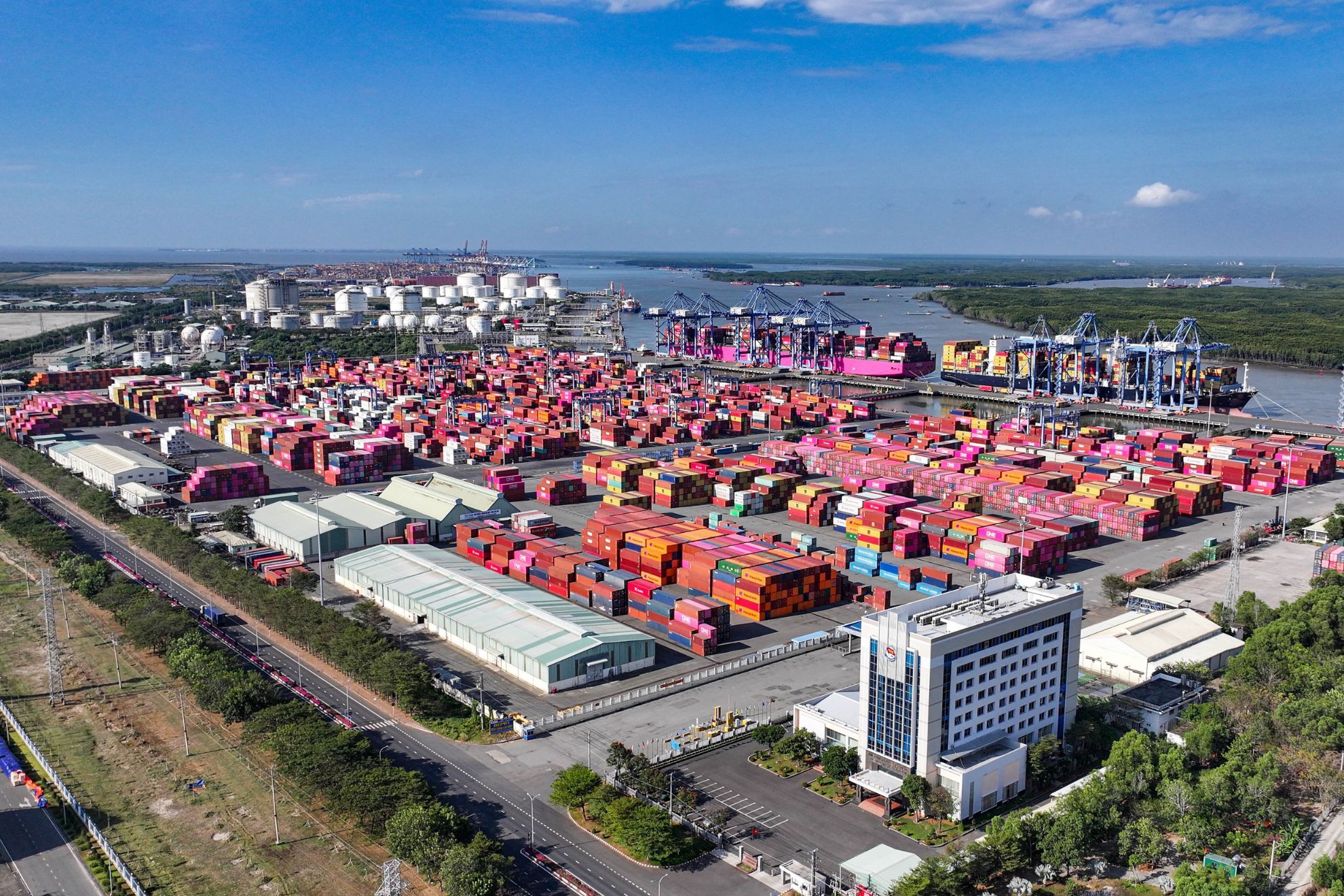
Tan Cang-Cai Mep Deep-water port operate in the area
“Vietnam’s ports are now among the Top 50 globally,” noted a senior port operator, referencing DynaLiners via Bizhub Vietnam News (September “2025”). “Higher SCFI rates incentivize carriers to maximize load factors, which boosts throughput but also raises the risk of bottlenecks.”
Logistics Firms Adapt to Margin Squeeze
Vietnam’s logistics sector is evolving rapidly. Occupancy rates for warehouses and industrial parks exceed 90% in the South and 86% in the North, reflecting strong demand.
Forwarders and trucking firms face margin squeezes from elevated bunker fuel costs and container shortages. To adapt, logistics providers are accelerating digitalization, investing in freight visibility platforms, and deploying AI-powered smart port systems at Cat Lai and digital twin centers in Hanoi.
“Digitalization and green logistics are no longer optional—they’re survival strategies,” said a logistics executive. “Vietnamese firms are investing in EV fleets and sustainable aviation fuel to offset rising costs.”
Strategic outlook
For exporters
- Proactively renegotiate long-term freight contracts to mitigate the impact of freight rate volatility.
- Diversify shipping routes through transshipment hubs such as Singapore or Malaysia to enhance supply chain flexibility.
For port operators
- Benefit from growth in cargo and container volume.
- Continue investing in infrastructure capacity expansion, automation, and operational optimization to limit the risk of congestion.
For logistics enterprises
- Face short-term pressure on profit margins.
- Create competitive advantages by improving operational efficiency, accelerating digital transformation, and developing integrated logistics services that add greater value for customers.
As the global container shipping market continues to maintain its growth momentum, flexible adaptability, technology investment, and supply chain capability enhancement will be key factors enabling Vietnamese enterprises to seize opportunities and sustain their competitiveness in the coming period.