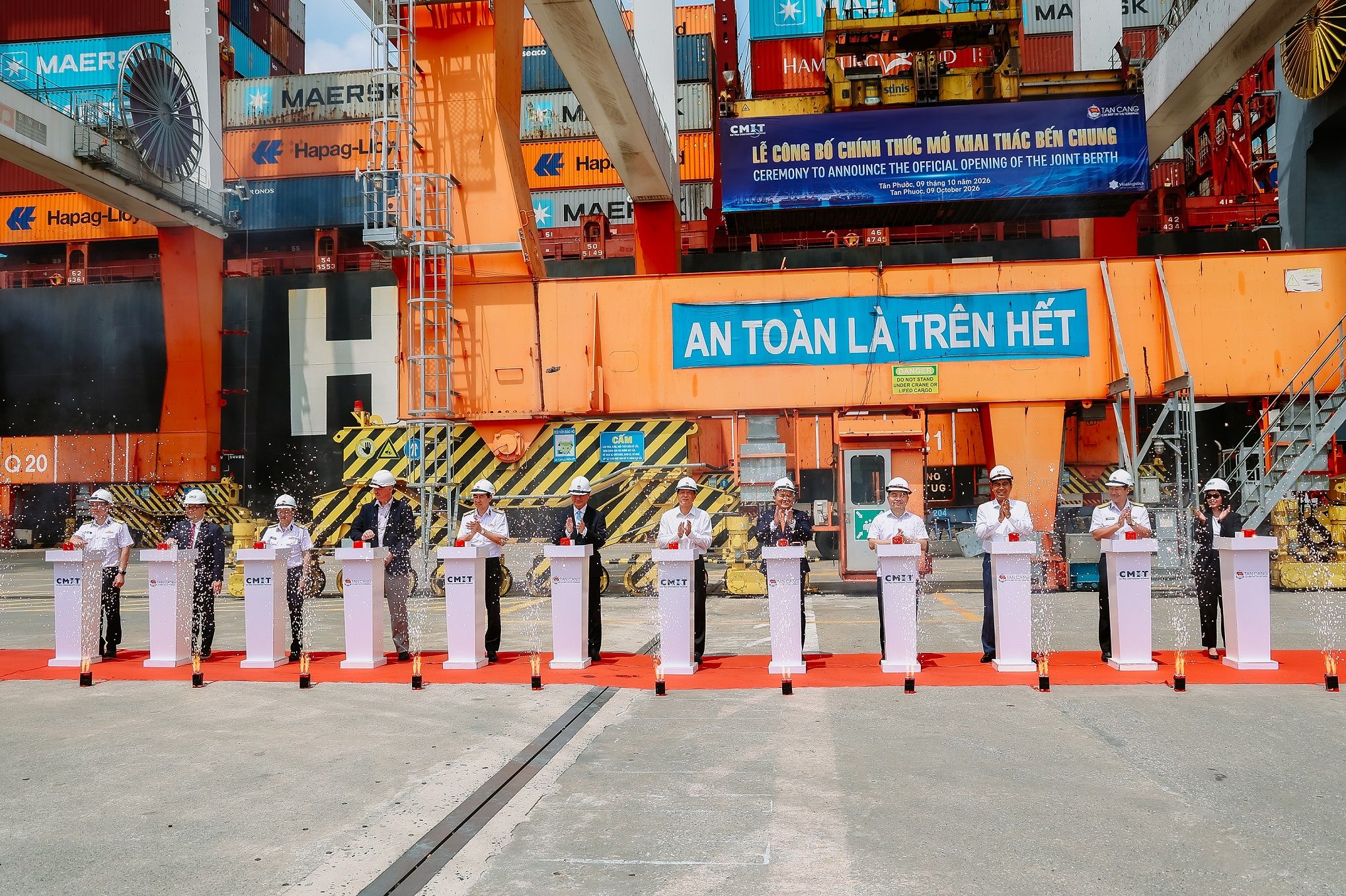
TCTT - CMIT launch shared berth operations, marking a first for independent container terminals in Vietnam
08/09/2026
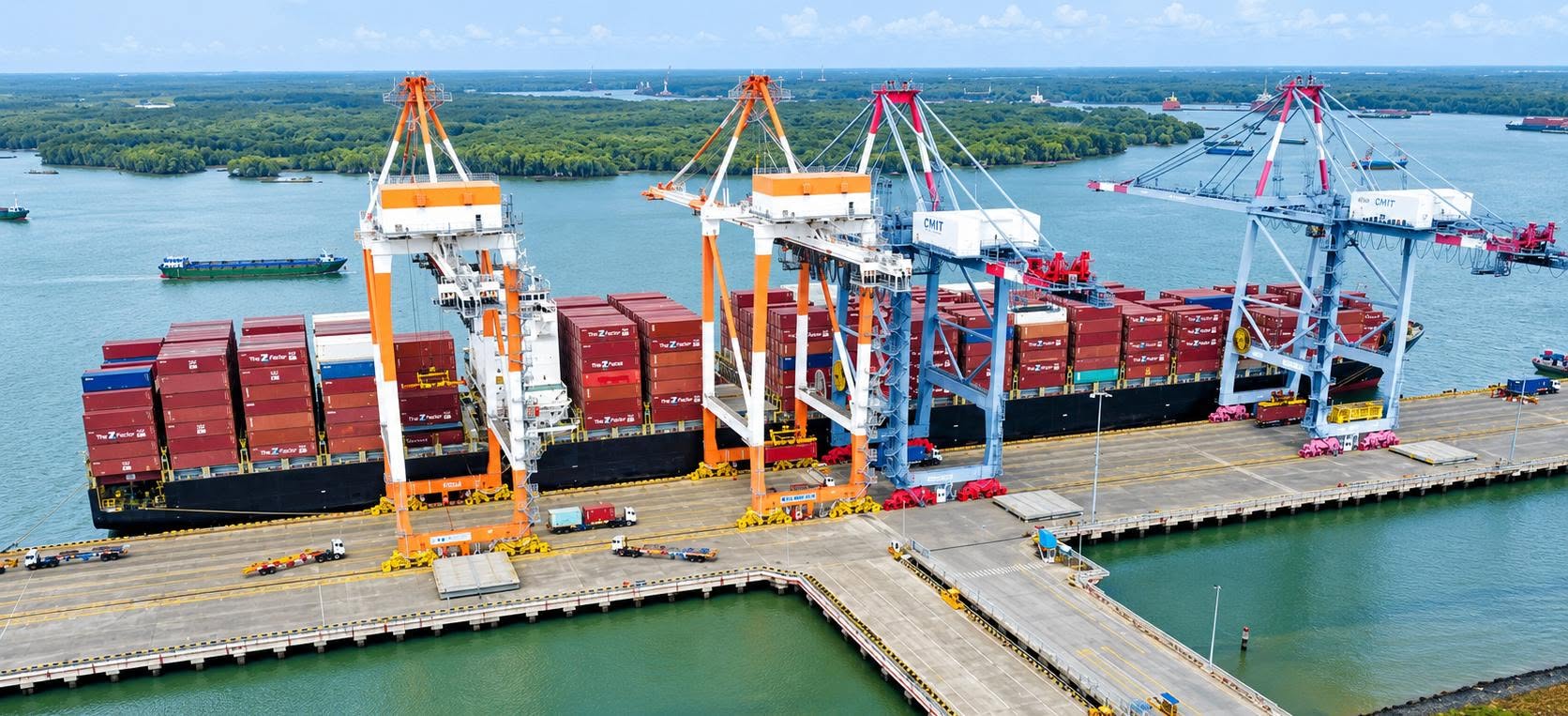
On September 8, 2026, Tan Cang – Cai Mep Thi Vai Terminal (TCTT) and Cai Mep International Terminal (CMIT) successfully handled M/V ZIM SHENZHEN at the TCTT–CMIT Shared Berth. Following the first technical trial with M/V WANHAI 331 in March 2026, the operation marks a significant step from testing to actual deployment, introducing a new model for optimizing berth infrastructure and operational resources in the Cai Mep – Thi Vai deep-water port cluster.
From Two Independent Terminals to a Shared Operating Space
In container terminal operations, large vessel handling capability depends not only on berth length and alongside depth, but also on the flexible allocation of berth space, equipment, vehicles, and operational resources at any given time.
As container vessels continue to increase in size, operational flexibility has become increasingly important. Given the adjacent locations of TCTT and CMIT in the Cai Mep – Thi Vai deep-water port cluster, connecting berth infrastructure to form a shared operating space enables both terminals to expand vessel handling capacity without requiring the immediate development of entirely new berth infrastructure.
A key feature of this model is that both terminal operators continue to maintain their independent equipment systems, operating teams, and resources, while coordinating under a unified operating plan for the same vessel.
This is considerably more complex than conventional operations at a single berth, as it requires synchronization across vessel planning, berth allocation, quay crane deployment, terminal tractor arrangement, traffic flow management, and coordination between the operations teams of both terminals.
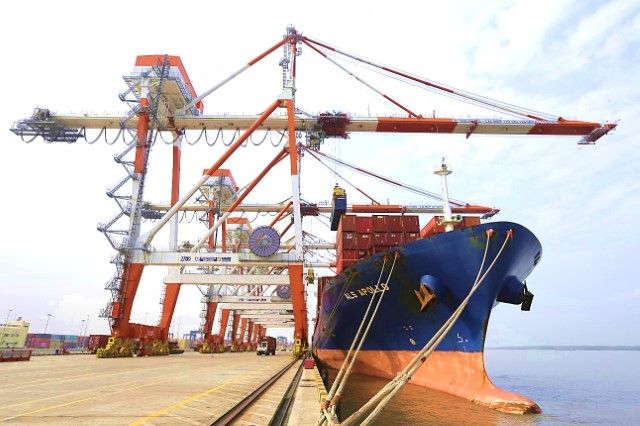
Previously, on March 30, 2026, TCTT and CMIT successfully conducted the first shared berth trial with M/V WANHAI 331. The trial provided a foundation for both terminals to further refine technical conditions, coordination procedures, and operational plans.
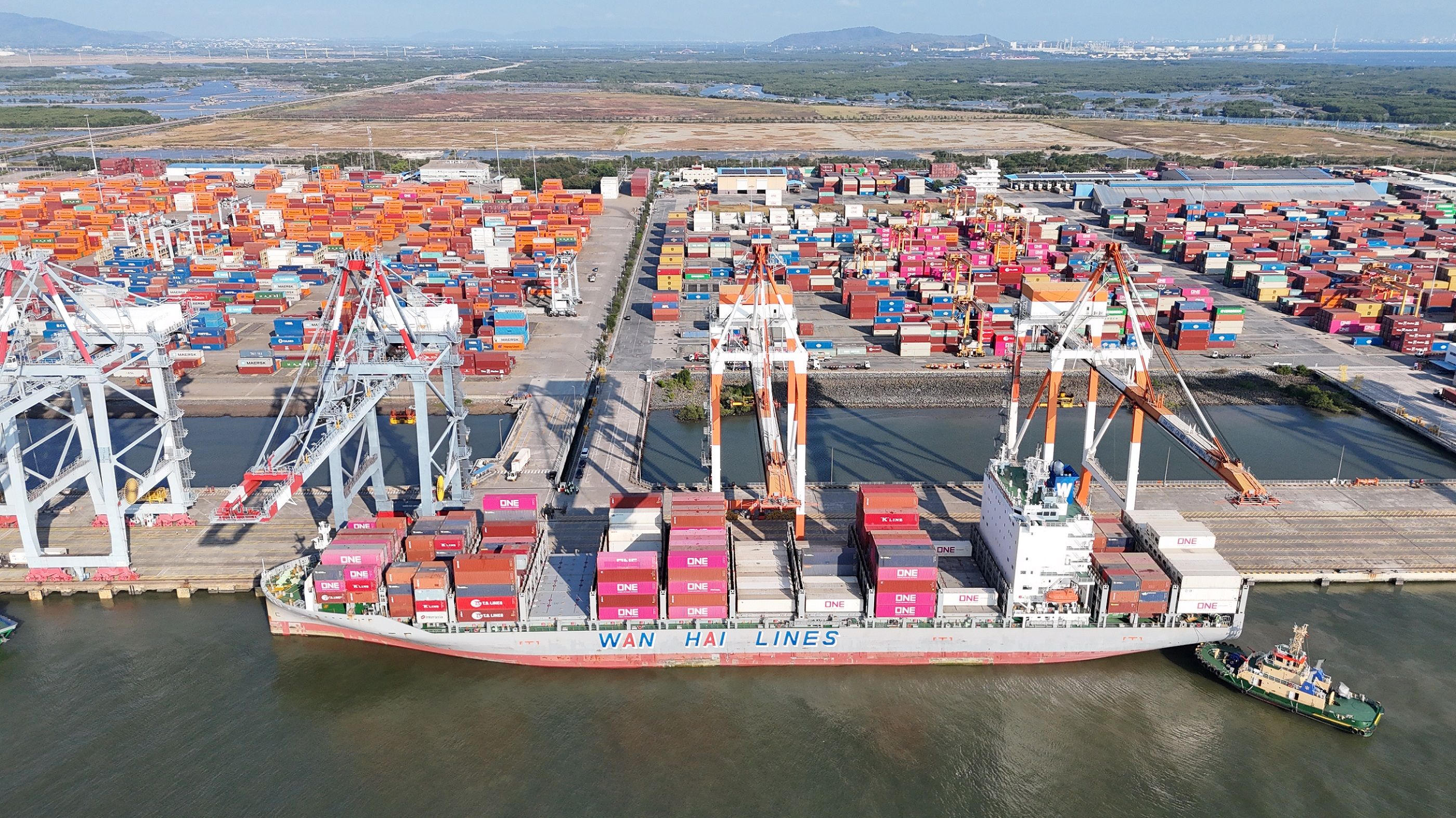
M/V WANHAI 331 – Trial vessel call at the TCTT–CMIT Shared Berth, March 2026.
On September 8, 2026, M/V ZIM SHENZHEN, with a length overall of 335.63 meters, was safely received, handled, and departed at the TCTT – CMIT Shared Berth through coordinated operations between the two terminals.
The handling of M/V ZIM SHENZHEN in September 2026 therefore represents more than a single vessel call. It serves as an important validation of the shared berth model as it moves from trial implementation to actual operations with higher scale and coordination requirements.
During the operation, TCTT and CMIT deployed a total of 4 quay cranes (QC) and 20 tractors, with each terminal assigning 2 QCs and 10 tractors.
TCTT’s handled volume included: 428 import containers, 433 export containers, 861 containers in total (equivalent to 1,485 TEUs) with average handling productivity of 94.25 containers per hour
TCTT and CMIT jointly handle M/V ZIM SHENZHEN at the Shared Berth (B3 Berth), September 2026.
These results demonstrate that the shared berth model is not only technically feasible, but also capable of maintaining high operational productivity when resources from both terminals are organized under one coordinated operating plan.
Optimizing Existing Infrastructure as the Core Value
From a port operations perspective, the key value of the TCTT – CMIT Shared Berth lies not in creating a new berth, but in enhancing the efficiency of existing infrastructure. Instead of each terminal optimizing its own assets separately, the shared berth model allows both operators to coordinate berth length and mobilize resources according to the actual requirements of each vessel call.
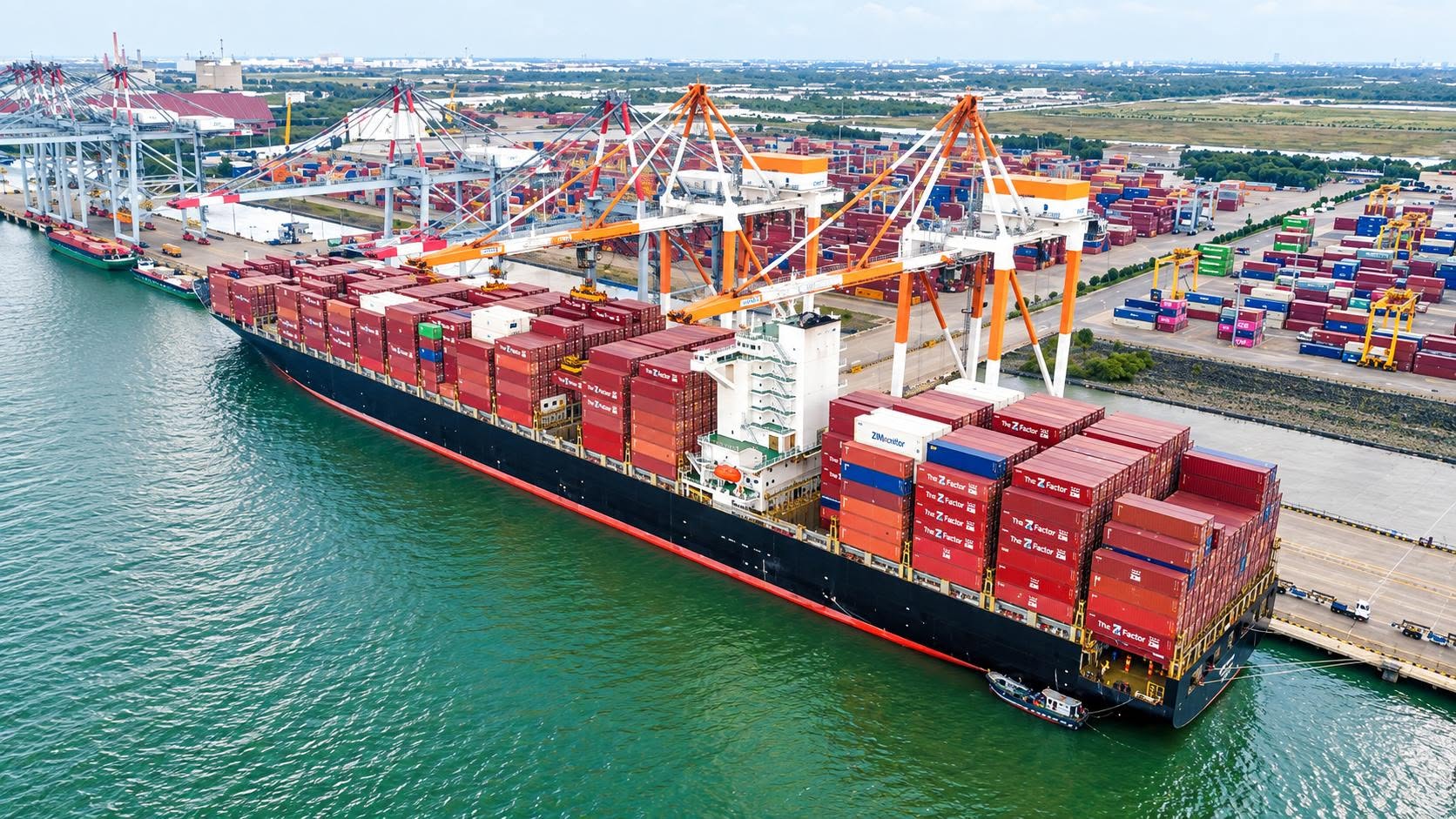
TCTT and CMIT jointly handle M/V ZIM SHENZHEN at the Shared Berth (B3 Berth), September 2026.
This model delivers three direct benefits.
First, it increases flexibility in berth planning, particularly for large container vessels or during peak vessel traffic periods.
Second, it improves the utilization of equipment and operational resources by enabling coordinated mobilization from both terminals.
Third, it creates additional capacity to reduce berth waiting time, maintain vessel schedules, and improve service reliability for shipping lines amid increasingly demanding global liner networks.
This also reflects a key trend in modern port development: competitiveness is no longer determined solely by new infrastructure investment, but increasingly by the ability to connect, share, and optimize existing infrastructure assets.
A New Cooperation Model for the Cai Mep – Thi Vai Port Cluster
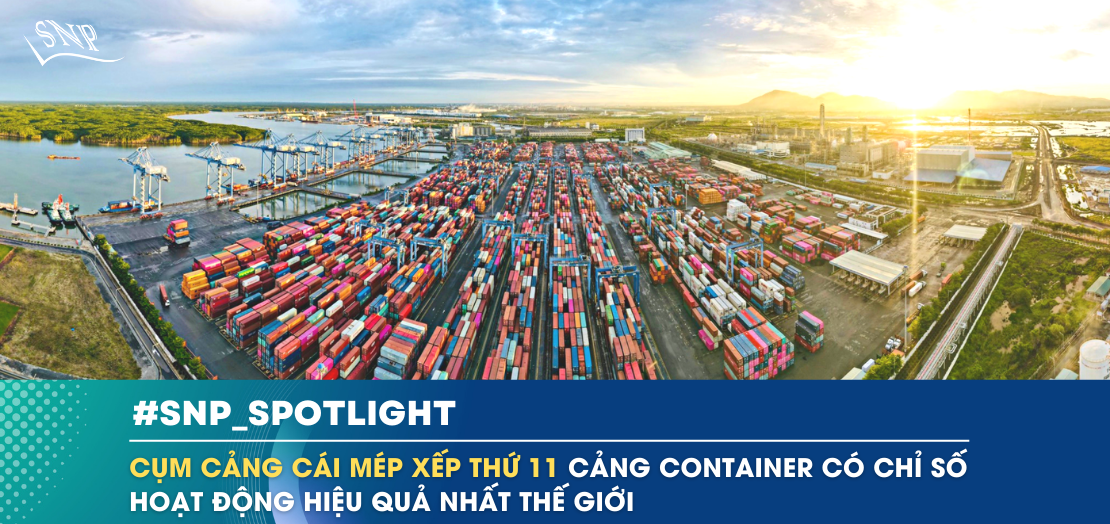
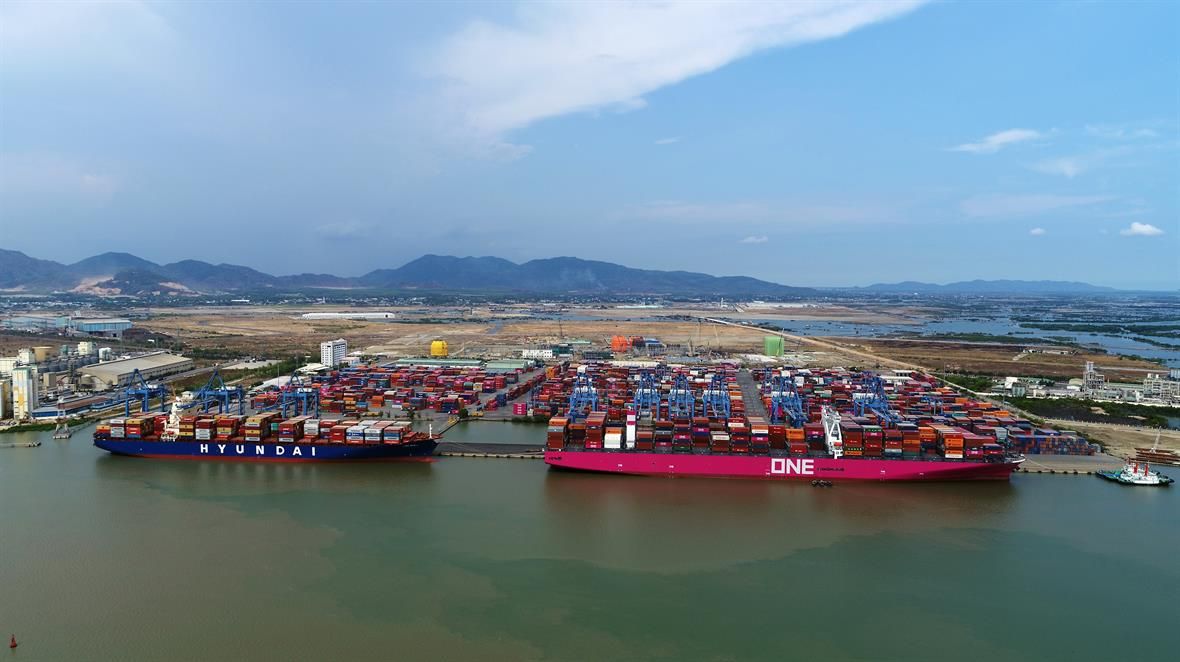
Cai Mep – Thi Vai is a strategic deep-water port cluster within Vietnam’s seaport system, capable of accommodating direct services connecting to Europe and the Americas. As vessel sizes continue to grow and operational requirements become more demanding, the region’s challenge is not only to expand berth capacity, but also to improve the overall utilization efficiency of existing infrastructure.
In this context, the TCTT – CMIT cooperation project presents a notable approach: shifting from independent terminal operations to coordinated infrastructure utilization between adjacent terminals.
If standardized in terms of technical procedures, operations management, data coordination, and cooperation mechanisms, this model can create value beyond the scope of each individual terminal. It may enable the port cluster to operate more flexibly, increase vessel handling capacity, and improve overall operational efficiency without depending entirely on immediate new infrastructure projects.
The cooperation between terminals also reflects a shift in how competition is viewed. In certain cases, collaboration in infrastructure and resource utilization can create greater shared value than isolated optimization, especially when the ultimate objective is to enhance the competitiveness of the entire port cluster within international shipping networks.
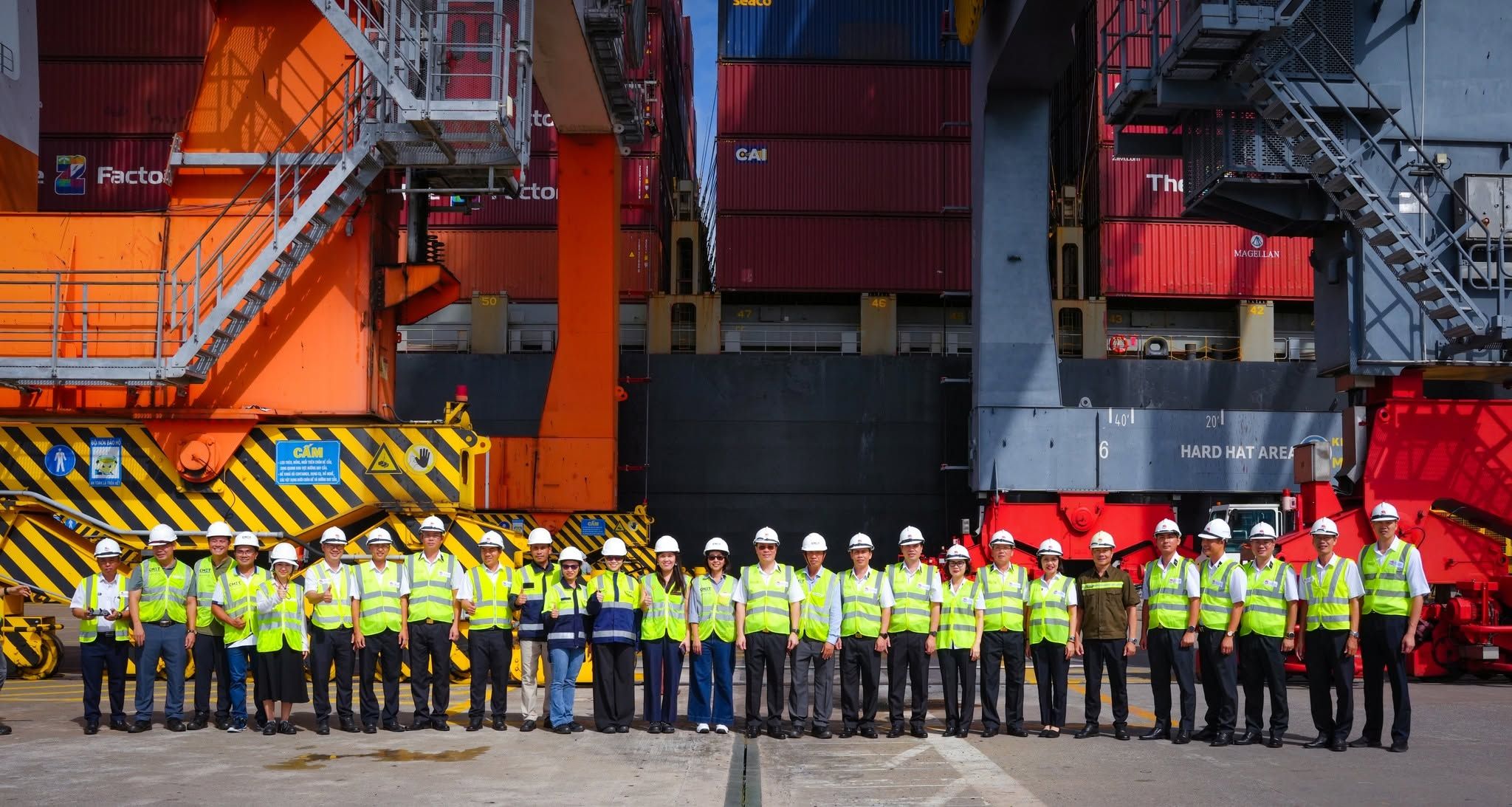
Coordination between TCTT, CMIT, and ZIM representatives during the handling of M/V ZIM SHENZHEN.
From the WANHAI 331 trial to the ZIM SHENZHEN operation, the TCTT–CMIT Shared Berth is gradually proving the feasibility of a new operating model in Vietnam: two terminals, two independent operators, yet one coordinated operating space for each specific vessel call.
The significance of this model lies not only in handling a vessel of over 335 meters in length or achieving strong productivity indicators. More importantly, it represents a practical test of the ability to connect infrastructure, synchronize operations, and share resources between two independent container terminal operators.
For TCTT and Saigon Newport Corporation, participating in the Shared Berth model is a strategic step toward improving the efficiency of existing resources, enhancing service quality for shipping lines and customers, and contributing to the competitiveness of the Cai Mep – Thi Vai port cluster.
From a broader perspective, the experience of TCTT and CMIT also suggests a meaningful direction for Vietnam’s seaport industry: future growth should come not only from expanding infrastructure, but also from connecting infrastructure more effectively.