Inland Waterway Transport: The Solution for Green Logistics
26/11/2026
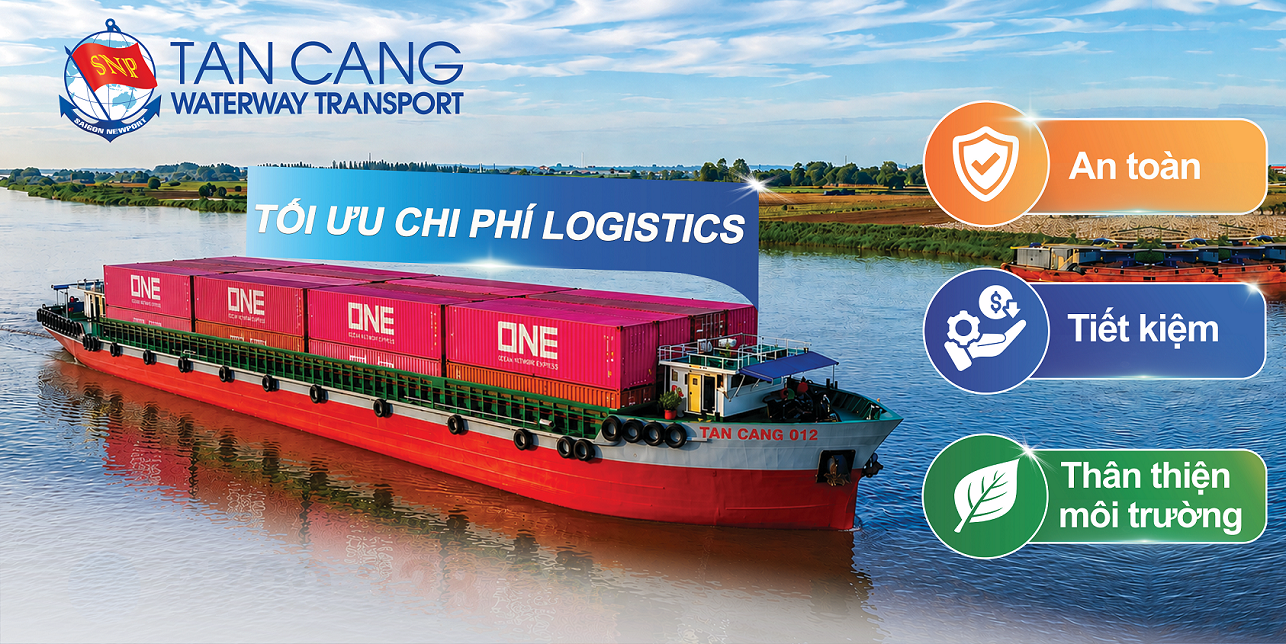
From Practical Demand to an Inland Waterway Network
Recognizing early road infrastructure bottlenecks between the Mekong Delta and Ho Chi Minh City (HCMC), SNP made a pivotal move in 2009 by establishing Tan Cang Transport No. 2 JSC, now Tan Cang Waterway Transport JSC. (TCWT) as its strategic spearhead to unlock inland waterway routes. At the time, river ports in Dong Thap Province primarily handled bulk cargo, with limited container operations. Export containers had to be trucked to HCMC ports, adding handling stages and driving up logistics costs.
The launch of container operations at Tan Cang – Sa Dec Terminal in 2011 opened a vital waterway link, bringing port and container services closer to local enterprises. From there, SNP steadily expanded its inland waterway network, linking production hubs to seaports through integrated barge, trucking, port, and Inland Container Depot (ICD) operations.
Giải pháp logistics linh hoạt: Tối ưu luồng hàng, giảm phát thải
In the Mekong Delta, TCWT deploys flexible barge-and-trucking models to bring containers closer to factories, material zones, and production facilities. TCWT tailors these transport models to each enterprise’s specific operational needs, including:
Door-to-Factory Empty Container Positioning & Long-Haul Optimization: For clients such as Honoroad and Hiep Tai, export shipments begin with empty container allocation in HCMC, barged to Tan Cang – Thot Not Terminal or Tan Cang – Sa Dec Terminal, and then trucked to the client's warehouse for stuffing. Laden containers are returned to the river port and barged to Tan Cang – Cat Lai Terminal or Cai Mep deep-sea ports such as Tan Cang – Cai Mep International Terminal (TCIT) and Tan Cang Cai Mep – Thi Vai Terminal (TCTT) for ocean export. Moving thousands of TEUs smoothly each month along this corridor drastically cuts long-haul trucking on the Dong Thap–HCMC route, directly reducing carbon emissions.
Port-Yard Consolidation & Storage Optimization: TCWT proactively pre-positions empty containers at inland river ports (such as Tan Cang – Thot Not Terminal and Tan Cang – Sa Dec Terminal). Cargo is delivered and stuffed directly into containers at the port yard before being loaded onto barges. This solution is ideal for businesses seeking to optimize storage costs and maintain full control over delivery schedules a model trusted by Viet Hao for years at Tan Cang – Sa Dec Terminal.
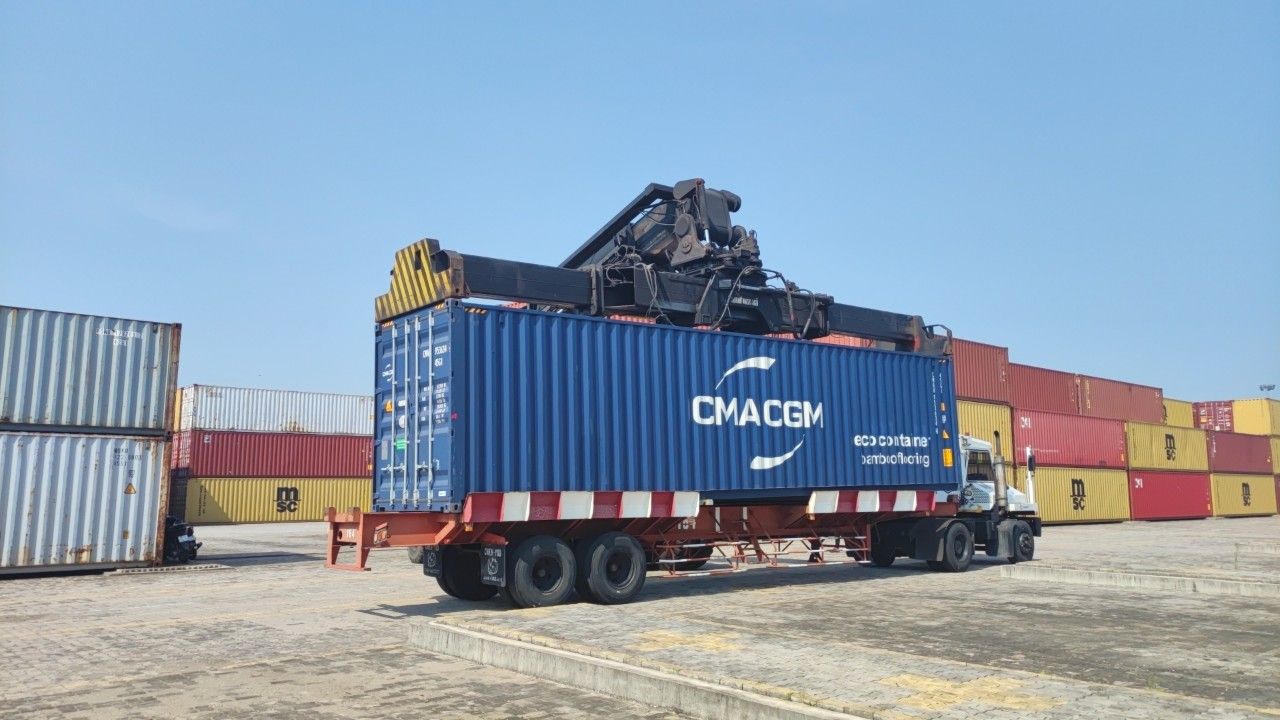
Hub-and-spoke Model - Barge and Truck Combination: Beyond the Mekong Delta, this model has proven highly effective in Northern Vietnam and the Southeast. TCWT barges empty containers from seaports to strategic ICDs (such as Tan Cang – Que Vo ICD and key hubs in Binh Duong, Dong Nai, and Tay Ninh), followed by short-haul trucking to factories. This smart connectivity enables major industrial corporations like Canon, Toyota, and Nitori to maintain supply chain velocity while fulfilling green logistics commitments.
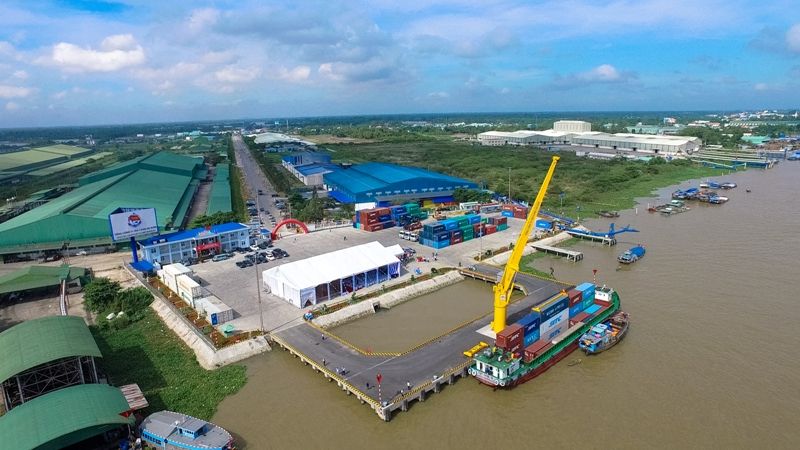
Bringing container services directly to raw material hubs empowers businesses with greater supply chain agility.
Cost Optimization Through High-Volume Capacity
A core competitive advantage of inland waterway transport is its high-volume capacity per voyage, helping businesses optimize logistics costs and ease road congestion. To meet demand, TCWT maintains regular sailing schedules: approximately 88 barge voyages per week on the HCMC/Cai Mep–Mekong Delta corridor and 6 voyages per week on the Hai Phong–Tan Cang Que Vo Dry Port route, ensuring reliable stuffing schedules and seamless vessel connections.
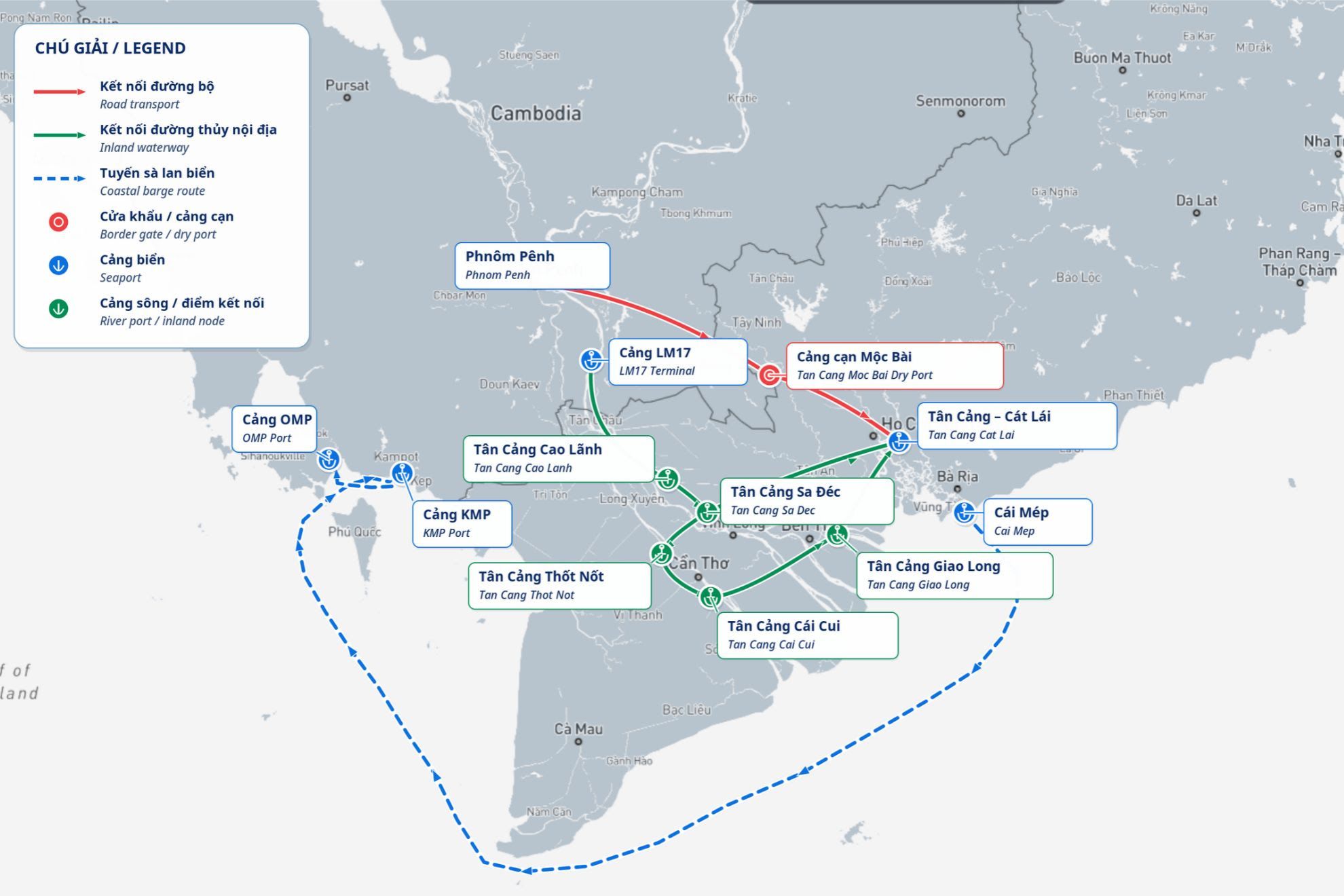
Inland waterway logistics network in Southern Vietnam and the Vietnam - Cambodia cross-border corridor.
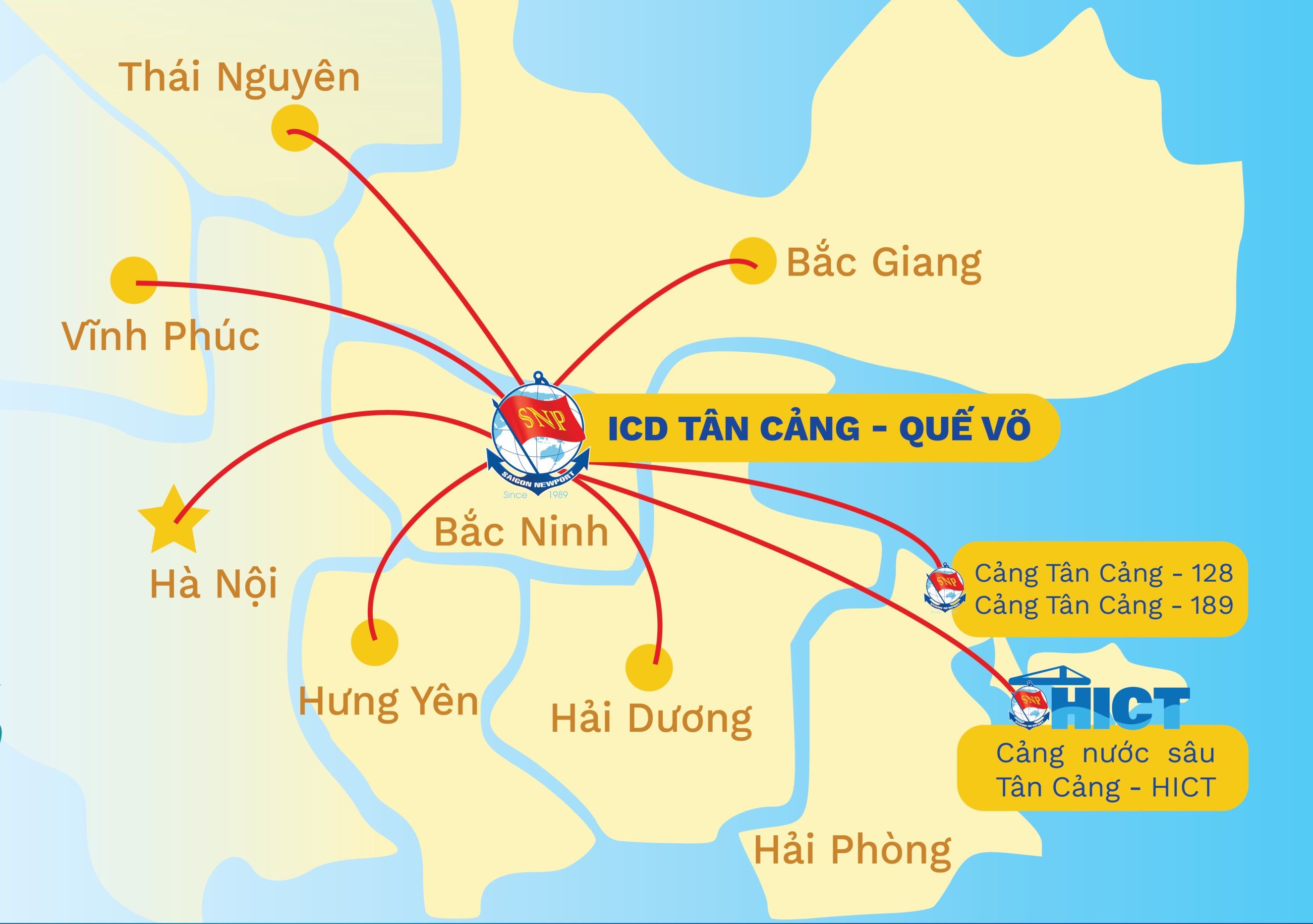
Northern inland waterway network centered at Tan Cang – Que Vo ICD.
Operational efficiency is reflected in strong results for the first 10 months of 2026: TCWT completed 27,000 barge voyages, handling approximately 1,570,000 TEUs (averaging 157,000 TEUs/month). Furthermore, cross-border waterway routes linking Phnom Penh and Cambodia’s coastal hubs with Southern Vietnam’s port system have created a vital gateway for cargo to access international mother vessel networks.
Advancing Integrated Logistics Toward Green Transport
According to the World Bank, road freight generates six times more CO₂ emissions than inland waterway transport. Optimizing multimodal cargo flows not only reduces costs for enterprises but also relieves infrastructure pressure and lowers environmental emissions
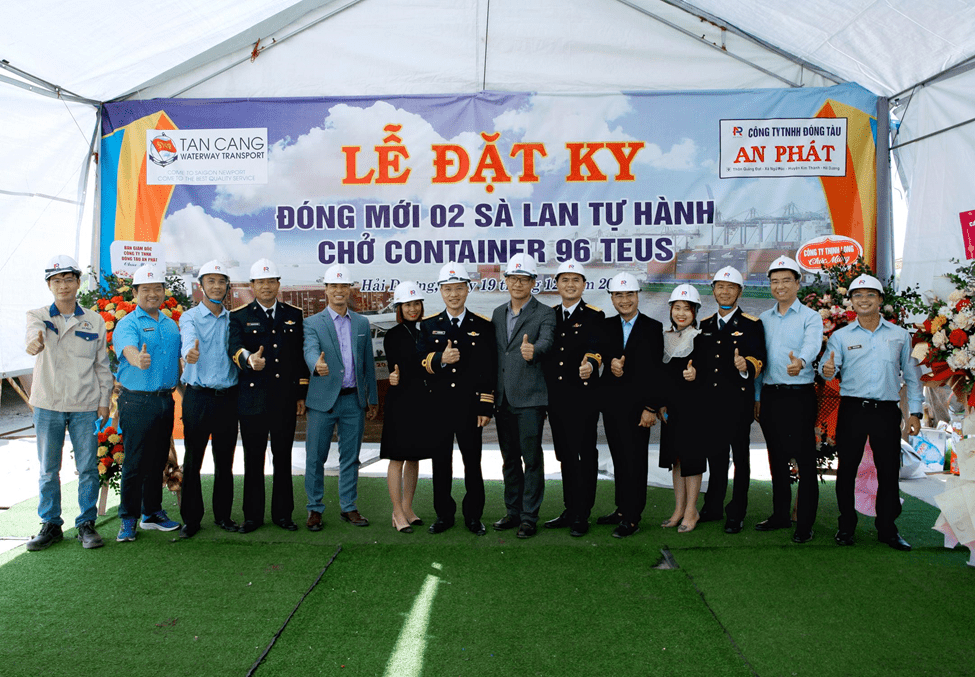
Aligned with SNP’s sustainable development strategy, TCWT continues to play a pivotal role in building green logistics solutions. To support this direction and expand transport capacity, the company invested in and commissioned two newly built 248-TEU barges in 2026. Concurrently, TCWT is steadily transitioning from a pure transport provider (2PL) to an integrated logistics service provider (3PL), moving toward comprehensive supply chain management (4PL).
From inland ports in the Mekong Delta and Northern Vietnam to cross-border routes into Cambodia, TCWT’s waterway network serves as a vital artery in the modern logistics ecosystem. Backed by SNP’s strong foundation and core capabilities, TCWT is committed to partnering with enterprises to optimize costs and build green, sustainable supply chains.